Justice (Deck of Lies, #1)

Get it everywhere online books are sold!

The Tower (Deck of Lies, #2)

Visit the Books page for free samples

Death (Deck of Lies, #3)

Get book downloads on the Free Stuff page

Judgment (Deck of Lies, #4)

Get the boxed set edition to get even more secrets!

Hope's Rebellion

Get it now!

Writing 101: Are You Really Ready to Self-Publish?

You've studied the craft of writing. You know all about formatting. You know how to edit. You've got a great blurb. You're a born storyteller. But are you really ready to self-publish? The job is about a lot more than writing, and it can be very overwhelming.

My Other Job is Not Sleeping

It takes a lot of time and study to write a book, any book. You've got to think about the plot, figure out the ending, complete the research, develop the characters, decide upon the setting...well, you know it takes a lot. When the book is finished, you have to edit it and format it for mass distribution. 

Once that's all done, the real work begins. It's not enough to put a book out there into the world, even if it's a great book. Even if it's the greatest book ever penned by the hand of man, it's not enough to simply self-publish it.

Now you have to market it. You have to slip into the role of indie author. And the problem with that is, it's a full time job. 

Once you decide to make a go of self-publishing, you have to start marketing. It's never too early to start. As an indie author, you should use all the available tools at your disposal. You need to get active on social media. You need to establish a presence in reader and writer forums. You should blog, and establish a brand for your audience to identify with. Oh and by the way, you need to publish more books. The more you publish, the more credible you become as a self-published author. 

And when you aren't doing all of that, chances are very strong that you're also working a normal "day" job in order to continue putting food in your mouth, maybe attending school to broaden your horizons, tending to a family that you love and attempting to maintain some sort of social life on top of it all. 

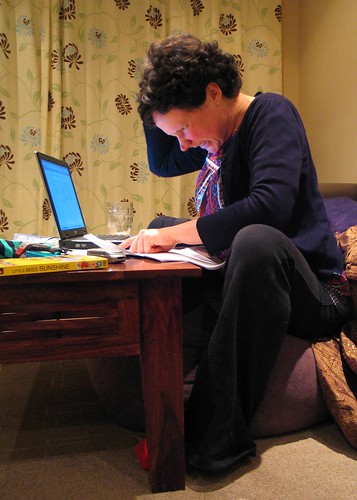
Your free time is going to be spent working on your next book, or answering Tweets, or combing through your author inbox. I work 7 days a week, every week, on some project or another. I count myself lucky to get a full 6 hours of sleep a night. I am an indie author. And that means I've got two full-time jobs.

So are you ready to take all of that on? If so, then go ahead and self-publish. It's rewarding to see that first review, and all the reviews after that. It's thrilling to get a tweet from someone who's read your book. It's exciting...but it's very hard work, and it's going to consume a huge chunk of your life if it's going to work. So are you ready? Only you can find the answer.

Writing 101: Social Marketing

Social marketing serves a lot of different purposes. It's a great way to stay connected with friends and family, or to re-connect with them. It's wonderful for learning more about people, for getting the inside scoop on celebrities and TV shows, it's a great distraction when you want to be entertained. But social media sites are popular, and that makes them good for something else: marketing. As a self-published author, you pretty much need to do it. But as a self-published author, you've got to play to your own strengths.


Socially Spamming

If you can get a lot of followers on Twitter, you have a great platform from which to tout your books. It's a good idea to post snippets of text, pieces of reviews and parts of your blurb to pique the interest of potential readers. But you can't do that too much, or else you'll be regarded as a spammer.

And it's not really the most effective means of social media marketing, anyway. Social media is supposed to be social, so that's where you've got to put your focus when you want to hawk more books. 

Social Social Media

Unless you are already an established personality in some medium, you are not going to build a fan base as a self-published author overnight. It's a very slow and steady process, especially where social media is concerned. The best marketing you can do is to simply be active. Show them you're a real person. Comment on other people's posts, make random comments of your own, give out likes and always respond when someone has something to say to you.
 
As a self-published author, being an everyday person is your strength. Show it off, show your personality, and reach out to others through social media. Join in on discussions, and get involved. This is a slow way to build your fan base, but you'll be building a strong one.

Writing 101: Add Your eBooks to the Library

How do you know you're a "real" author? For some, it's seeing their book or books available at the public library. Now that many libraries have added ebook collections to their spanking-new virtual shelves, it's a possibility. Add your ebooks to your local library's database, and join all the other big-time authors who loan their books out for free.


Amazon at the Library

Amazon released many of their electronic titles for lending at libraries all over the United States, and you can join the list of available books.  Many of the ebooks available at local libraries can be found on a central database which distributes the books.

From the OverDrive site, readers can type in their zip code to find the ebooks available at their local libraries. It's even got an app.

To get your books listed on OverDrive, and subsequently at libraries across the country, you'll have to apply for a publisher account with the site. If you're with a small press, contact them about potentially becoming publishers with OverDrive to offer your titles for lending. 

Listing your ebooks at local libraries makes them more available to readers, and free books are much easier to share. Run promotions to share lending links, and get more readers.

Writing 101: What Makes a Story Great?

Everyone who wants to be an author thinks about writing a great novel, not just a massive bestseller but something that lasts through the ages. Think Pride and Prejudice, Gone With the Wind, A Christmas Carol. Then you start writing...and realize you'll settle for just getting the damn book finished. But after you write three or four, it might not be out of line to try and reach for greatness again. So I've got to ask: what makes a story great?


All the Earmarks of a Great Novel

We've all read great books...and we've all read bad books. The differences between the two can be very minute indeed -- the wrong word, the wrong ending, a missed opportunity can be the determining factor in a brilliant story and a horrible one. But truly great stories do tend to have a few things in common. Master them, and you may find your greatness.

  • Strong main character: Notice the adjective. Great main characters do not have to be good, and they do not have to be heroic. They do not have to be beautiful. They don't even have to be likable. But they have to be strong. Make that character come alive and leap off the page. You don't necessarily root for Scarlett O'Hara to get what she wants, but you can't stop reading about her. 
  • Clear narrative: You don't have to tell a linear story, and you don't have to tell it in the past tense. You do have to tell me a story that I can understand. Make sure I can follow it.
  • Plot: Stuff has to happen. Make sure you're adding love scenes, action sequences, other exciting stuff to keep readers engaged. Remember that all these plot developments should serve the story; each scene should be taking us closer to the end.
  • Flow: The way the words flow is arguably the most important aspect of any book. The writing should be smooth, and it should be easy to understand. You don't have to pull out the five-syllable adjectives or wow me with the most uncommon irregular verbs in the English language. Simple words allow the story to shine through. 

And that's about it. The setting, the genre, the theme -- all that stuff is important, but it can be changed at will and won't make your book any less great. Weak characters, confusing wording, a messy story and a boring plot are things that will kill your story. Put your focus where it matters, and write a great one.

Jumping into the Tower


"Thrilling sequel. I can't wait to read the next book!"


The Tower (Deck of Lies, #2) has been reviewed at Counting in Bookcases. Go read it if you're all caught up on book 1, Justice. If not, go buy both right now!

The Best Story Starters are Nearby

Need a good story starter? Feeling lost at the beginning of  a book project is common, and many writers find themselves staring at blank screens (I do it all the time). Start your story with the right tools, and you'll see it through all the way to the end.


I visited Lisa Fantino's blog recently to write all about the best story starters you can find. Visit her blog at Amalfi Blue to find out what they are!

Writing 101: Find Your Motivation Again

Writer's block takes many forms. Sometimes you just lose interest in a story, or writing in general. Maybe you suffer from a lack of focus, or you just feel the well of ideas has run dry. There's an easy way to find your motivation again, and get yourself back to writing. 


Writing for Writing's Sake

When you're having trouble writing, it's often because too many thoughts are getting in the way. Over-thinking it is a common problem, and it's also common to feel sort of "blah" about writing. When you need to motivate yourself, think about your favorite movie. 

What's your favorite scene from the movie that you like best? If it's really your favorite, chances are good that you know at least one scene backwards and forwards. So, write it. Describe the scene with your words, using as much of the real dialogue as you can remember. Think about every little detail, and put it on the page. Just start writing it, and get into the rhythm of punching the keyboard. Notice how nicely the words flow. It's not your scene, but they are your words. So write out the scene and go back and re-read it.

When you're done reading, you may find that you're ready to write something else. Maybe it's time to dust off one of those neglected stories, or maybe there's a new idea in your head all of a sudden. Try it, and see what happens.

Writing 101: Write What Interests You

I watched crime shows and court shows all day, every day while working on the final book in the Deck of Lies series. They inspired me, and helped me stay in the right head space to get the story together. Also, I really like those shows...it's why I like to write mysteries. I've found that if you write what interests you, you write better.


What the Heart Wants

Suzanne Collins got the idea to write The Hunger Games while watching news and reality TV. She watched politics and brutal competition, so that's what she ended up writing about. She wrote about what she likes, what interests her, and it became a hit.

It's a pretty simple formula. If you're interested in something, and passionate about it, your story is going to be much richer. Your love of the topic itself will enhance every aspect of your tale. Research will be easier and the words will flow more freely. So now all you have to do is figure out what interests you...and parlay that into a bestselling book.

Should be no problem.

Wait...What Does it Want?

Pay attention to the things that interest you. Are there similarities in the TV shows you watch, your favorite movies? Certain themes or ideas that strike you?  Maybe it's a setting that grabs you the most. Do you like movies and TV shows about life near the beach, in the snow, in fancy mansions or maybe in the mean streets of the city? Figure out your interests, and you might find some story ideas in there.

For example, maybe you watch a lot of cop shows and shows that are set in high school. You like movies that take place in big cities with plenty of singing and dancing. Why not write a story about a high school girl who moonlights in the city as a private detective -- and she's in the school glee club? It could be a zany comedy filled with hijinks as she tries to balance these two seemingly disparate interests (something you could write well if you share these interests), or a romantic drama in which she helps apprehend a ring of vicious criminals and wins the heart of the lead singer in the rival glee club. 

Play the game with your own interests, plucking out various pieces of them and putting them together in a plot. Who knows? Maybe you'll find your own Hunger Games.