Justice (Deck of Lies, #1)

Get it everywhere online books are sold!

The Tower (Deck of Lies, #2)

Visit the Books page for free samples

Death (Deck of Lies, #3)

Get book downloads on the Free Stuff page

Judgment (Deck of Lies, #4)

Get the boxed set edition to get even more secrets!

Hope's Rebellion

Get it now!

Dramatic Justice

"This book throws you into the drama and it NEVER.STOPS. The writing is spectacular!"


"I loved it! It was exciting, crazy and full of twists and turns you never see coming. I highly recommend it!"

Justice (Deck of Lies, #1) has been reviewed at Lily Bloom Books. Read it to find out what the reviewer found jaw-dropping about the book.

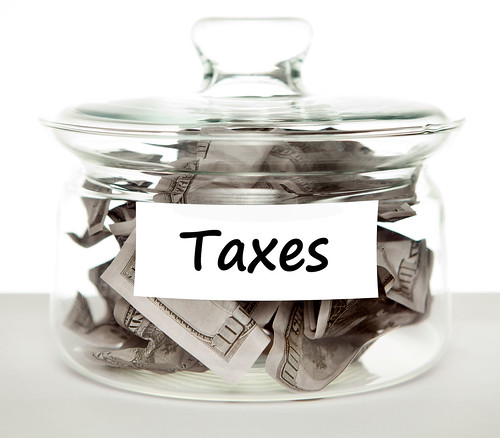
Writing 101: What You Should Know About Taxes

It's March...do you know where your income is coming from? Before you break the federal law, figure out what you should know about taxes as a self-published author. 


Two Sides to Every Coin

Once you sell a certain amount of books through any venue, from Amazon to Smashwords, you will receive a check in the mail or an automated payment of some sort; it all depends on the payment information you've submitted. When this happens, it's an amazing day. You earned money as an author, and you are a success.

And you are liable for it as a taxpaper. Because here's what you may not know about self-publishing: you're doing it as an independent contractor. What does that mean?

It's pretty simple. You have sold something, a product, on Amazon (or B&N, or whatever). Amazon has taken their cut of the profits and now they are giving you what you have earned as the author. But they have not taken taxes out. Amazon is not your employer. You didn't fill out tax paperwork with them, they are not filing for you with your state or federal agencies. You are an independent contractor.

And you're responsible for claiming your taxes yourself. As a citizen of the United States or any other country (and I am assuming you are), you must pay income taxes. Everyone who lives and works in any country must pay taxes to the central government. The government uses this money to build roads, pay teachers in schools and put cops on the streets -- your basic public service stuff. Amazon isn't claiming your income for you because you do not work or Amazon. You have to claim your income yourself.

When you earn money as an independent contractor, you are technically self-employed. And you're in luck, because so am I.

In the United States, this is how it works: when you earn income as an independent contractor, self-employed professional, freelancer or a self-published author, you must claim this income in order to pay income taxes. Your income taxes are based upon a percentage of what you earn; it's roughly 25% unless you earn more than $200,000 a year but if you earn more than $200,000 a year you probably already know what you need to know about taxes. Here's the fun part: you must also pay self-employment taxes. This is about 15% of your total self-employment earnings. The SE tax pays for Social Security, Medicare and other programs that are usually covered by payroll taxes. As a self-employed professional, you do not pay payroll taxes, so that's why.

Confused yet? The good news is, you are only liable to claim your income and pay self-employment taxes if you earn more than $400 as an independent contractor. More good news: the money you spend on your books is tax-deductible. That cover you bought from that artist? The editor your hired to help clean up your words? That tester Facebook campaign you launched? Yes, even the cost of the official copyright -- it's all tax-deductible, because it's a direct business expense. Claim all your expenses, and this is deducted from the independent income you've earned. That means your tax payment is lessened.

Due to new tax laws taking effect in this year, as a self-employed professional you can no longer claim your taxes and pay them only once a year. In the past, many independent contractors have managed their taxes this way. This is no longer allowed. If I'm reading all the information correctly, which is admittedly questionable, self-employed professionals are now obligated to make quarterly tax payments -- the means every three months. This April 15, you must claim all the self-employed income you earned in 2012, and pay all associated taxes. You must also claim all the self-employed income you have earned in 2013 up to April 1. You must claim your taxes, and pay them, again every three months for the remainder of 2013...and for the foreseeable future, until the tax laws change.

It's pretty frightening, I know. Tax forms are pretty much impossible to understand. If you're confused about it, don't be afraid. Call the IRS and get help. They're always there and they will absolutely help you, even if the problem is that you can't pay the taxes you owe. They'll work out a payment plan with you and they're very flexible, so don't be afraid. I've called them several times, and their customer service is far better than what most private corporations are willing to offer.

Get Addicted to Justice

"This fairly addictive, well written novel is a must read for people looking for something fresh, quick, and mysterious." 


"The plot is wonderful and the characters are amazing. I am addicted to the mystery and lies!"

Counting in Bookcases has reviewed Justice (Deck of Lies, #1). Read the spoiler-free review before you get your copy of the book.

Movies on Paper: Star Wars

I've written many posts about books that became films. Much more rarely, this happens in reverse: people write books inspired by movies. The best example you're likely to find is Star Wars, Episode IV: A New Hope. It was on film first. Now, it's in everything.


The Film

I'm certain there's nothing I can tell you about Star Wars that you don't already know, except maybe that I find Family Guy's to be the definitive spoof and I'm sorry, Mel Brooks (Spaceballs reference). 

It's basically your classic heroic tale, only set in space. The story, to paraphrase, goes something like this. A pretty young and untried filmmaker named George Lucas got an epic idea for a movie, so he wrote it all out. He started showing it around, and movie studios were overwhelmed. They told Lucas he didn't have a movie in his hand -- he had several movies. So Lucas selected the middle chunk of his epic sci-fi fantasy story and said, let's make this into a movie. The studio said, let's make it three.

So they released A New Hope, technically the fourth chapter in the epic story but the first movie made in the franchise, in 1977. 

It blew everybody away. The special effects were mind-boggling and the story so good, everybody pretty much overlooked the fact that three unknown actors were playing the leading roles. Star Wars has it all: romance, mystery, space battles, scary soldier guys, a creepy villain with an amazing name, a little weird guy who's surprisingly wise, a princess, swordplay...and a Bigfoot. It hits all demographics. 

This was a sci-fi movie to end all sci-fi movies, and the franchise has done nothing but grow for the past thirty-five years. A New Hope spawned (so far) 5 more movies, comic books...and dozens of novels.

The Books


There are way, way too many Star Wars books to list, and the authors are numerous as well. Suffice it to say that a great many authors have been inspired by the first film and its subsequent sequels and prequels. Read them to learn a great deal more about different periods in time and all your favorite characters from the films.

Moved to Write

A good story is a good story in any medium. My Twitter followers might know that I'm a big fan of The Walking Dead, which was inspired by a series of graphic novels, and I am not a fan of comic books. There aren't a lot of movies that have inspired authors to create books, but it is proof that inspiration to write can come from anywhere. 

If you can't find your own story to tell but the words inside you are clawing to get out, why not try an adaptation? Many successful, and wonderful, books have been written as adaptations or re-tellings of other stories. Shakespeare and Jane Austen remain favorites in the adapted classics department, but your inspiration may come from anywhere. Tell us the untold story of someone from one of your favorite movies, or books, or poems or even songs. It's still an original idea if it's something that hasn't been seen before, a twist perhaps on something we have. 

Who knows? Maybe you'll write something so interesting, others will be inspired by you.

Writing 101: Getting an Agent

So, you want to get a literary agent. You've written you book, and it's good. Good? It's great! Agents ought to fall over themselves for it. ...If only you knew how to get to the agents. I can tell you how to do it, but I can't promise you'll be happy with the results.


How to Get an Agent

First, don't bother querying any agents until your book is done, done, done. I'm talking it had better be edited and polished to the nines, or you're only doing yourself a huge disservice. Once it is, I want you to put together a list. Do whatever you can to make sure it's a big list

  • The List
Let me preface this by saying that this is going to take some time. You increase your chances if you take the time to follow these steps, and even then your chances are slim. That's the nature of the business. Go to Agent Query first. This is a reputable site that contains listings of literary agents. Use the search feature to seek agents who accept your genre. Select other criteria as desired. It goes without saying that if you can't pigeonhole your genre, don't bother doing this. If you want to get yourself an agent, you have to got to sell it. You can't sell it if you can't define it. Again, this is just the way the business works. 

Get out your Writer's Market next. If you don't have one, get one. It's really one of the best tools for writers, and I'm pretty sure it's now available in an e-version so that might be the best way to go. Either way, you have to go through the agent listings (and the book has many; it is quite thick). Copy the relevant information for all the potential agents you find. They will be listed by genre and a good deal of additional information will be offered, so this will take some time. Put the list together and save it. You will need it again. Take care not to get repeats; you will find many of the same agents in the Writer's Market and on Agent Query. 

  • The Letter
You've got a nice juicy list of agents -- great! Now, you have to write a great pitch letter, also known as the query. First rule: five paragraphs, no more, and make them short and sweet. Agents receive hundreds of letters every day and they will definitely skip yours if you decide to wax poetic for 9 meaty paragraphs. 

Get right to the point, but let your natural voice shine through. The first line of the letter should be your hook. Ask a question, make a strong statement, say something crazy. The name of this game is to write whatever it takes to get their attention, though I do suggest you relate it in some way to your book. For example, if I wanted to pitch a book based off of this blog, my letter might begin with something provocative like What do most authors get wrong when they're writing books? Then I'll go on to answer that question by pushing my agenda.

The opening paragraph is your hook and your brief intro -- sort of a hey look at this! It's my book and my name is Jade, only much more professional. The second paragraph goes into more detail. Answer basic technical questions by telling them the length of the book, how many chapters, and the basic plot. Again, get right to the point. You don't have to be flowery, just compelling. Show that you have a good understanding of your own material by describing it in a succinct, interesting way. 

The two following paragraphs should go on to explain the book in more detail, and detail your own qualifications and your target audience. Tell them who this book appeals to, and why. Tell them why you're the best to write it, and anything else you can toss in there. Have you self-published already? Do you have a big blog following or lots of fans on Twitter? As the saying goes, if you've got it, flaunt it. Don't pull your punches in this letter. 

In the closing and final paragraph, quickly sum it up. State that you're seeking representation for this project and thank them for their time and consideration. Always include your contact information at the bottom. Do not send anything else. Send only the query until and unless you are instructed to do otherwise. 

And All the Rest

Fifty percent of the time, you will hear nothing back from any agent either way. Of those who do respond to you, most are likely to be rejections. However, if you have written a strong enough query letter you will get at least one response. Write a brilliant query and you may get more. Read the email they send you more than once and follow all instructions to the letter. Good luck! 

Writing 101: If You Don't Know About It...

Then why are you writing about it? As some of you probably know, I spend much too much time reading forums. Often, I'm wading through endless questions about setting, animal husbandry, types of vegetables, head trauma...one guy sincerely wanted information about bear attacks, because the animals aren't native to his geographic region. It's a pretty thin excuse for practicing a really bad writing tactic: overreaching...and I could make an argument for laziness, too. Either way, it's bad - so stop! There are alternatives to asking random questions about the secret life of onion bulbs in open, public writer forums. 


 Totally Unfamiliar Territory

I find it incredibly mind-boggling that so many writers would use plot devices with which they are utterly unfamiliar -- particular when so much stuff could just be changed to fit something about which the author is more knowledable. Let's go back to bear guy, shall we?

In the book he was creating (and this is a general "he," I can't possibly know the sex of the person who posted the question but bear attack feels like a masculine choice to me), one of the characters was going to get attacked by a bear. Yet he knows nothing about bear attacks, so why not ask a public forum group at large for help?

Why not, indeed? Allow me to count the ways.

  • Anonymous answers are always the wrong answer: You're writing a book that's meant to be published. The minute you put some incorrect information in there about the habits of bears, I promise you that one of the people who reads your work will be some sort of ranger, zookeeper or animal expert. They will call you out on Amazon and you will feel bad about it. You don't know who's answering your forum questions or what the heck they know about bears or any other subject. Until you get it from three respectable sources, it just isn't true. That's it.
  • You should do your own work: I'm an indie author like you, not your personal research assistant. It's rather unfair for anyone to go around on forums asking random research questions. Why? Because I already know you know how to use the Internet; you're posting on forums. Clearly you can find this out yourself, so why are you asking? In the same amount of time, you can discover the info. I touched on this very thing in another forum-related rant (thinly disguised as a blog post), but it bears repeating because it keeps happening.
  • You don't know what you are talking about: If you have to look up bear behavior and attacks to finish a scene, maybe change the scene. Why? Because reading text about how bears attack and looking at pictures of grizzlies just isn't the same as facing a pissed off one in the woods, that's why. You haven't been in that situation, and maybe you've never even seen a bear. Why put one in the story? Write the scene to describe an event that maybe you are a little more familiar with, and you'll be able to add so much more to it. Writing what you imagine is great, but it adds a lot more depth when you write what you know

As an author, you will have to explore totally unfamiliar territory a lot. You have to think about characters and feelings and motives and settings and events. Don't make it any harder on yourself than you have to. You get to choose the plots and the setting, so try to choose something that you're comfortable with. You can create a scifi world that still resembles your geographic region in some ways. You can invent animals that are similar to the pet rabbit you had as a kid. Interject real memories and knowledge of your own into your stories, and you'll see that you write much better stories.

Writing 101: What Should You Blog About?

I must admit, I've been avoiding this topic for a while, though I see it crop up constantly. Many self-published authors are told to start blogging to build a fan base, which sounds simple enough. Doesn't everybody offer free blogs these days? Isn't design easy thanks to built-in templates? So you create your blog and pick a pretty design...and then horror strikes. What the heck are you supposed to blog about?


Blogs, Books and Writing...Oh, My

It seems like there ought to be a simple solution, right? After all, you're a writer...shouldn't blogging be a breeze? In truth, maintaining a blog can be pretty hard work, especially when you'd rather be hard at work on your next book. It's especially hard if you aren't committed to your topic. So...what's your topic?

In the world of self-published author blogs, there are a few different types of blogs you'll see a lot.
  • The author blog: This is a blog dedicated to telling readers about your work as a writer. What are you working on now? What happened today? Allowing readers into the process of your writing can be a very effective blogging style, but make sure you've got stuff to write about. This is why I personally have avoided writing a full-on author blog of this sort; I can't find a way to make typing for 12 hours day sound at all entertaining. Molly Snow's is one of the really good author blogs out there.
  • The book blog: If you're a writer, it follows that you love books. This is why a great deal of self-published authors have book blogs. A book blog is a great choice because there's always something new to write about and lots of interesting recurring features you can add. Book reviews, cover reveals, excerpts, sneak peeks and author interviews are all common elements on book blogs. You'll find a good example at Aside From Writing.
  • The personal blog: If you're an interesting person, or capable of writing blog posts that make you sound as though you are, you can always maintain a personal blog that features a mix of all your activities and snippets of daily life. Here, you'll talk about your writing, your reading and other aspects of your life. If you're naturally open and lead a pretty interesting life, this may be a perfect choice. A good example of this type of blog can be found courtesy of Annalisa Crawford.
  • The niche blog: If you are an expert or an enthusiast in any particular topic, and it happens to pertain to any aspect of writing or reading or books, you should use it. Parlay this interest into a blog, as I have done. Look to Redwood's Medical Edge to find a much better example of a writing-related niche blog.
If you don't want to blog about your own writing, blog about other people's. Or maybe blog about writing in general, books you love. Whatever you choose, blog about something that you are interested in and something you can write about with some degree of knowledge or skill. Make sure the information you blog is correct, or you will lose credibility with readers. And stick with it. Many self-published authors are discouraged by very slow progress, but if you continue to blog and strike up professional relationships with other bloggers you will slowly build up a base of readers.

Writing 101: Hooked on an Ending

Sometimes the end is the first part of a story that reveals itself. When you get stuck thinking about it, you may never have the chance to write it. 


A Love Story

Once, just once, I fell in love with a story. I was so besotted, I couldn't stop thinking about the characters and setting even after the book was done. I imagined new plots, new events, new characters and brand-new jokes. 

I started the sequel almost as soon as I finished the book I so loved. I knew exactly how it would start, the time period I wanted to cover...and I knew just how it would end. With tears, and a poignant moment next to a tree. It's really much better than it sounds.

I was in love again. So I started my sequel, and blazed through the first few chapters like this was the story I'd been born to tell. I was so excited I couldn't type fast enough.

At first. Then I got through all the setup chapters...and realized I was very far from reaching my oh-so-dramatic ending.

I'd forgotten all about the middle part of the book. I knew how to write the ending...I didn't know how to get to the ending.

Beginning at the Beginning

The trouble with falling in love with an ending is clear: it wont ever love you back. I never did finish writing that book, and there's a whole long story about me and writer's block that happens before I resolved that particular issue. There were lots of reasons I couldn't finish that story, but since then I have managed to finish several others. 

Don't think too far ahead. I advocate writing an outline, and figuring out every single step it takes to get all the way to the end. But after that, begin at the beginning of the story...and write it. Don't think about the next chapter, or the final scene. Just focus on the one you're writing in that moment. The end of the story may evolve as you write it, so you have to be flexible. Treat every scene like it might be the last you write; as far as you know, it is. If you're thinking too far ahead, you're not giving the right amount of attention to the rest of the story.