Justice (Deck of Lies, #1)

Get it everywhere online books are sold!

The Tower (Deck of Lies, #2)

Visit the Books page for free samples

Death (Deck of Lies, #3)

Get book downloads on the Free Stuff page

Judgment (Deck of Lies, #4)

Get the boxed set edition to get even more secrets!

Hope's Rebellion

Get it now!

Writing 101: Backing Up and Rescuing Your Manuscript

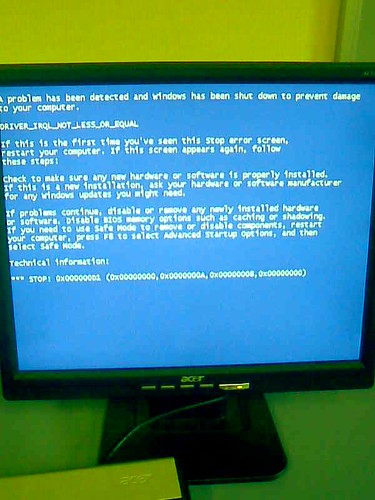
Spend time on a computer regularly, and it's bound to happen to you: data loss. Power outages, viruses, various meltdowns, there are all sorts of reasons your computer might malfunction and cause you to lose something you'd rather keep. But when it happens to your manuscript, it's the deepest cut of all. Don't lose your work! There are ways to avoid the problem, and ways to fix it when you haven't been avoiding it arduously enough. 


 Saving Your Book

I'm a little on the obsessive side when it comes to saving my work, because I've agonized through more than one crash in the past. But I've learned others aren't quite so psychotic about hitting the "save" button repeatedly. In fact, the computer makes it pretty easy to get lazy. Any word processing program worth its hard drive space will have an auto-save feature that automatically saves your progress, pretty much every time you pause. Even online programs, like blogger and gmail, have this auto-save feature. It's all too easy to watch drafts of your book automatically save themselves.

It's all too easy to grow complacent. But the first time you lose an entire manuscript, an important chapter or even a pivotal scene, you'll start to step over to this side of save-craziness. Don't learn the lesson the hard way. Before you ever worry about backing up your book, make sure you're saving it in the first place. When you pause to think or stop to go get a drink, hit the "save" button. If moving the mouse is too much trouble, you can simply hit Crtl-S on the keyboard (PC users) and save the work that way.

It never hurts to save the book in two different files on the hard drive. After you're done working for the day and everything is nicely saved, go up to the File menu and hit "save as" to store a second copy in an entirely new folder. You're doing this for an important reason: viruses and other corruption. A file you're working on constantly is more likely to fall prey to an unsavory program or problem, and your extra file may be spared from whatever is compromising your system.

Backing Up Your Book

No matter how up-to-date or fancy your computer, it's always susceptible to problems.  All it takes to wipe out a hard drive is a single flash of lightning, and I know because I've been there (here's a free tip: turn your wired machines off during electrical storms). That's why you should back up your book, and all related files you want to keep, every single time you work on it. 

Get into the habit of slapping a flash drive or backup drive into place at the end of every day, when you're ready to shut down the computer. Just copy the files from your hard drive onto your backup drive. It will only take a few moments to complete the entire process. USB flash drives are very inexpensive, and as a matter of fact you can write the cost off on your taxes (because they are a self-employed expense, are they not?). Save the receipt in order to write off the cost. 

Recovering Your Book

Of course, it's not always easy to remember to back up work -- and it's not always easy to make time to do so. When you fail to back up your book, that is the moment when you will lose it, invariably. So if for some reason you find that you can no longer locate your book on your hard drive, and your backup files don't have the new progress you've made, you're going to have to try to recover your work. 

Sarah Marcus wrote a very detailed posted explaining the data recovery process for writers. You may have to access your word processing program's file folders in order to look for temp saved files if your computer is still functioning. Microsoft users can also use the program's Application Recovery tool to look for recently-opened files on the system. You should also check the program's temp files to see if one of them is your book, recently auto-saved to the system. 

But that's pretty much a best-case scenario in data recovery. If you believe your book might be lost due to a huge computer failure, it's most likely because of a serious problem that prevents the computer from functioning normally. 

First, get a new hard drive and install it in the computer with necessary operating system software. Next, re-connect the damaged drive and set it as a slave to the new, non-corrupt hard drive. This will allow you to access any remaining data on the damaged drive that you want to restore. It should go without saying that if you have no idea what I'm talking about here, solicit some sort of help from someone in-the-know when it comes to computer technical issues. If help is out of reach, you can always look for software programs such as GetItBack to aid you in the data recovery process. 

If all else fails, look for professional help before you give up on your book for ever. Paying for data recovery can be costly, but the time you've already put into your book is also valuable. Try to save yourself all of these headaches by backing up your work every single day, and none of it will become an issue.

Stop to See Me on Your Blog Tour

Dawn Smith Books, a blog dedicated to writers and writing, has kindly named me as their official blog tour stop for the week! Visit the site to get all the details on the first two books in the Deck of Lies Series, Justice and The Tower. You'll find the blurbs, the reviews, the trailers and more.


Writing 101: Is It Further, or Farther?

The English language doesn't always make a whole lot of sense. The word "subtle" has an inexplicable b in the middle of it, "knife" is spelled with a k...and a single letter can totally change the meaning of a word. So when you're writing, are you getting farther along in your book -- or are you getting further along in your work? Maybe you're doing both, and either way you'd better know the difference.


Farther vs. Further

It's an epic word battle, and one I personally struggle with every single time. No matter what I'm writing, the minute I want to use further or farther, I'm forced to stop what I'm doing and look up the differences between them. It's just one little vowel, but it makes a big difference if you end up using the wrong one. In fact, it changes what you're writing entirely.

Writing 101: Writing Reviews

In the indie community, writing reviews isn't a courtesy -- it's pretty much expected. Indies know how hard it is for other indies to get reviews (or readers at all), and there are lots of different groups, review swaps and deals happening all over the indie book community at any given time. Because of the helpful spirit, the tit-for-tat review deals and the strong desire among indies to get more and more reviews, writing reviews is something a great many indie writers have to face. So if you're going to do it, make sure you know what the hell you're doing. How much do you know about writing reviews?


 Reading, Writing

Many writers are also readers, because to practice the craft you've got to love it. Reading someone else's work is the only thing that keeps me sane at times...and other times, it's enough to drive me insane. That's because reading within the indie community isn't the same as dipping into the mainstream fiction pool. There are a lot of undiscovered gems to be found in the indie book community, but there are a lot of duds, too.

When one of those duds happens to be a book that you're committed to reviewing, things can get a little dicey. What if your review is part of a swap arrangement, and contingent upon getting a review for your own book? What if your review is for a friend's book? What if you've got to review it, and the book sucks?

Reviewing

It's enough to make anyone panic, but you don't have to. If you have a formula to follow and a certain set of reviewer morals to stick with, you will never go wrong. You may get sassed by an indie writer or two, but you won't be wrong -- and at the end of the review, you can smile to yourself and know you've done the right thing.

  • Read the book. 
If you're committed to doing the review, you've got to finish it no matter how bad it is. And we've all been there. At some point, every voracious reader has pushed themselves to finish a book they didn't really want to finish. It's like exercising, or cleaning the house -- just get it done, and then it's done. But while you're reading, make sure you look for any and all strong points the author has displayed. This can be a real challenge, but if you read hard enough you're sure to find something likable in the work -- strong imagery, creative plot lines, interesting characters, setting. You may even find merit in an author's research skills alone. The worse a book is, the harder you have to look to find something redeeming. Trust me, you'll need it later.
  • Decide objectively. 
Once you've gotten all the way to "The End," sit back and be objective. Forget about the fact that you've got to write a review for your blog, or Amazon, or wherever. Forget about the indie author behind the book you've just read. Think like a reader, be honest with yourself, and ask yourself how high you would honestly rate this book if no one else ever has to know. You can hardly tell other people what you think about a book if you haven't got it sorted in your own mind. 
  • Review. 
You cannot, under any circumstances (swap or no swap) write a false review publicly for any book for any reason -- not even if you do it under a fictitious name that has nothing to do with your pen name -- and I'm going to tell you why: integrity. Even if you are writing those reviews under a false name, the person you're review-swapping with knows who you are. Other indies and other readers could easily begin to recognize the review name you use, and they're going to peg you for a liar the first time they read a book with very few redeeming qualities that you've rated at 4 or 5 stars. And what happens then?

Then, they sure as heck won't want to read the book you've written. If you're posting false or overly embellished reviews on your blog, the more discerning readers aren't going to be interested in any other post on your blog. 

What I'm taking a long time to write is that you've got to be honest -- both for your sake and for the sake of the author you are reviewing. Negative feedback is infinitely more helpful than positive reinforcement in the writing world. No writer can ever improve without knowing where they are weak, and a brave reviewer with an unvarnished, honest opinion is an incredibly powerful and useful motivational tool. I talked at length about the merits to be found in bad reviews in a previous post, and I'll stand by my opinions. 

But at the same time, there's a right way and a wrong way to offer criticism to an indie writer. If you know that you have many negative things to say about a book, and you honestly can't give it a four-star or five-star rating, the kindest course of action is to contact the author and tell them that. 

Was the work lacking in description? Did you feel that you had no idea who the characters were? Was the book filled with inaccuracies and/or errors? It should be very easy for you to explain flaws like these to the author gently. Remember how hard you looked for strengths in the book? Mention those first! Always preface negative comments by telling the author what you did like about the book. It is also a kindness to offer not to post any reviews of the book publicly, but if you do go forward with the review always stress those strong points in the writer's work and always keep the review honest -- honest, but not necessarily harsh. As a reviewer, your biggest asset is the kind euphemism and a diplomatic attitude. Remember how hard it is to write a book, how boring it is to edit, and keep your comments as kind as you can. 

Writing a Review

When you go to write a review, it pays to be succinct. It's not always easy to know how to start, what to say and how to finish a review. You can always come up with your own formula and review style, but you can always borrow mine, too, if you need it: 
  • How'd you get the book? Many reviewers like to mention how they found the book, by way of introducing it and the review. It's a good place to start, especially if you don't know where to start in a review. 
  • What's it about? Is the book a romance, a mystery, a thriller? Give the readers a few basic lines about the book in general, so they have a context for all your comments. 
  • What'd you think? Now's the time to mention the good and the bad, the things you liked and didn't like. What stuck out the most to you? Write the review the way you'd tell it to a friend. Be casual, be approachable, and use plain, forthright language that I can understand. 
  • No spoilers! Don't spoil a book for another reader, or make an author grimace with pain at your words. Always re-read your review to make sure you're not giving away the book's ending or any surprise plot twists. You can always touch on these elements of a story without giving too much away (example: "The twist in the middle with Girl's backpack caught me completely off guard;" "When everything came together at the end, I felt very satisfied"). 
  • In summation. Close the review neatly by re-stating your overall opinion of the work ("I loved it!" "I enjoyed the plot, but the characters could use a little more development;" "I enjoyed it despite all the errors") and, if applicable, stating who you'd recommend the book to and/or if you will be reading more from this author. Remember to keep your comments constructive, kind and honest. 
Reviews should be written in the first person and in a casual tone, but you should also conduct yourself professionally with every single review you write. If you plan to do a lot of reviewing, you will begin to gain a reputation. Make sure it's a good one. Yes, some indie authors will take exception to your opinions of their work, but you will find that most of them are open to comments and criticism and truly want to improve upon their craft. Once readers know that you are an honest and thoughtful reviewer, you will attract more authors with open minds who truly want to improve.