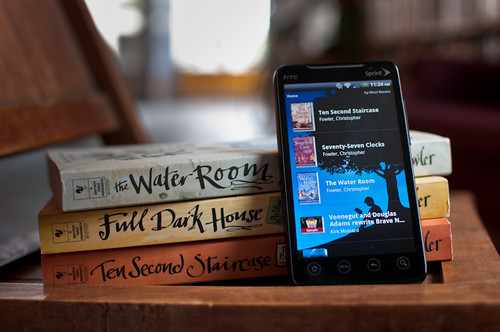
Justice (Deck of Lies, #1)

Get it everywhere online books are sold!

The Tower (Deck of Lies, #2)

Visit the Books page for free samples

Death (Deck of Lies, #3)

Get book downloads on the Free Stuff page

Judgment (Deck of Lies, #4)

Get the boxed set edition to get even more secrets!

Hope's Rebellion

Get it now!

Writing 101: Gonna, C'mon and Other Bastards

When two words are shoved together to make a brand-new word, it's known as making a bastardized (or corrupted) word. If the word catches on, it becomes a part of common language. But when is it okay to use these corrupted words in your books?

Why, I Oughtta

Gonna is one of the most common corrupted words. It's real meaning is used like "going to," as in "I'm gonna finish this blog post soon." This is an example of a true corrupted word, with letters just shoved together to form a whole. The new word is spelled the way it sounds, as is often the case with corrupted language.  Emcee is another example. It's a bastardization of MC, which stands for master of ceremonies.

We use corrupted words so much, in fact, that it can be hard to keep track of which words are bastardized and which are not. When you face one of these corrupted words in the pages of your manuscript, what should you do? 

Proper English


Words like gonna appear in everyday conversation all the time, along with other corrupted words like c'mon and oughtta. And when they appear within the dialogue of your books, it's okay to use them because that's how people talk. But your character should not be thinking gonna or oughtta; they should be thinking going to and ought to

Bastardized words can, and in some cases, should, be in your dialogue. But in the rest of your prose? Proper English is always called for.

Writing 101: Action vs. Dialogue

When you really think about it, all decisions really boil down to one of two choices, don't they? Every battle is decided based on those two choices. And as an author, you have to decide which you'll use to introduce your plot points: action or dialogue? 


One for the Ages

It is truly an epic battle that is waged on every page of every manuscript ever written. Should you use the spoken word to convey that piece of information, or a scene involving actions instead? Should you blend the two together into one multi-layered scene? And if so, how? Action vs. dialogue is a never-ending struggle...and I've noticed one common thread among the authors who find themselves losing that war. 

You can't ever let dialogue win. If you want to win this war, then you must embrace the fact that action must be your champion. He's your Achilles, your David, your Russell Crowe. Dialogue is a scrappy little fighter, and it's fine to let him win a few battles. But action is going to carry your book, and it's going to eventually win out. Otherwise...well, you're going to have a pretty boring book. 

Writing 101: Going with the Flow

Sometimes, writing is the hardest thing in the world. You have to think twice about every word, struggle with each line, repeat the dialogue out loud before you change it all around. But sometimes, it's not. Sometimes, you'll settle into a groove. You'll get into a zone. And that's when words just start flowing. When that happens, you've got to go with it. 


Words Before Agony

I'm a big advocate of doing the research and getting it right, and I don't care what you're writing about. If you're going to describe a tree, I think you should get out your reference materials (like Google) and learn about that damn tree. But I also believe that when the words are flowing, you need to go ahead and flow with them. Because when the well is dry, you'll have plenty of time to do your research.

Writing 101: Being Ridiculous

By nature, writers spend a lot of time in their own heads. I'm one of those writers who takes this to a dark place. I'm overly analytical, highly critical, and I've learned that I'm getting in my own way when it comes to creating stories. My newest project is a perfect example of how I spend so much of my time being afraid to just be ridiculous.


Wishy-Washy

As I've mentioned, I've been struggling with my current manuscript. It's one of those stories where I have to bleed over every line and I'm soaked in sweat before even one more paragraph is completed. Every time I try to think about it, I change my mind about 10 times and end up right back where I started.

I found myself taking another look at different projects instead, anything to distract me from this nightmare of a story. And I found myself drawn to the same project again and again, something I started working on before the Deck of Lies. I realized that I have a full outline and character sheet for the book, not to mention 5 completed chapters. Why did I ever stop working on this in the first place?

Affected by Hope's Rebellion

"This book is so jammed packed with emotion that you can’t put this book down without feeling unaffected." 


"This book gets under your skin in ways you didn’t think of and draw a lot of emotions out of you."

Hope's Rebellion has been reviewed at the Reading Cafe. Visit the blog to see the review, and you'll find a post from me about deadline stress (and how to deal with it)!

Indie News: A Time for Segregation?

If the self-pubishing craze continues to grow as it has done, next year 50% of ebooks will be self-published or indie titles. And now, some bloggers are saying they should be separated from the traditionally published books. In fact, one says it's time to start segregating them. 


Talk About Shopworn...

If history counts for anything, segregation of anything doesn't really work. When it comes to people, forced separation leads to resentment. When it comes to products, the market usually ends up choosing for itself.

But to play Devil's advocate, there are reasonable points to the argument. The blogger calling for the change points out that many books with very adult themes can appear online inside inappropriate categories, and self-published titles may be listed right along with more traditional books. The blogger says plainly that ebookstores must separate the "good" authors from the "bad." According to him, "good" authors earn a living solely through writing books and "bad" ones do not.

Judging Jade

"I read this amazing book in one day. I read it until my eyes were twitching and watery because it was such a page-turner (like the rest of the books in the series)."
"Just go read this series because it’s one of the best out there! GO, NOW!"

The fourth and final book in the Deck of Lies, Judgment, was reviewed recently at Little Book Star. Read the whole review to find out why the reader loved the book!

Writing 101: It's Not Always Emotional, It's Physical

Start looking online, and you'll find hundreds of articles and blog posts that detail the emotional toll of being a writer. You're going to get rejected. You're going to get bad reviews. You are going to get your feelings hurt, and it's going to be really hard. But even if you think you're handling these dark emotions well, there may be something you've overlooked: stress can cause physical complications, too. Even if your mind can handle the trauma of being a writer...can your body, too? 


A Gut Feeling

I began to experience extreme pain in my abdomen last summer. It became chronic, an everyday affair, so I began seeing doctors. I'm a woman, and being a woman always muddies the waters no matter what the hell you're attempting to do. And when you're a woman experiencing pain and there is no immediately obvious cause, everything is more complex because now all your female parts have to be studied under a microscope, along with all the usual pain-causing suspects in the anatomical lineup.