Justice (Deck of Lies, #1)

Get it everywhere online books are sold!

The Tower (Deck of Lies, #2)

Visit the Books page for free samples

Death (Deck of Lies, #3)

Get book downloads on the Free Stuff page

Judgment (Deck of Lies, #4)

Get the boxed set edition to get even more secrets!

Hope's Rebellion

Get it now!

The Second Time Around: Wuthering Heights

In just five minutes, most people can name at least one movie they've seen or book they've read that featured two young lovers who fell under each other's spell despite the fact that their families are mortal enemies. Shakespeare made this sort of ill-fated romance famous in Romeo and Juliet, and now it's a convenient device for any writer who wants to create romantic tension. Certain plots come around again and again, because they're just too good to enjoy just once. But sometimes, authors decide to re-vamp entire books decades after the fact, copying plot lines, characters, setting and circumstance for brand-new audiences. The second time around, I found out I still don't like Wuthering Heights.


The Original

First printed in 1847 and written by Emily Bronte, Wuthering Heights was not an instant success. Emily was but one of the ill-fated Bronte sisters, all of whom were writers and each of which would die young. Her sister Charlotte had published a book the year before, Jane Eyre, and it was a big success in contemporary circles. Anne Bronte released her book, Agnes Grey, in the same year Emily saw her work published.
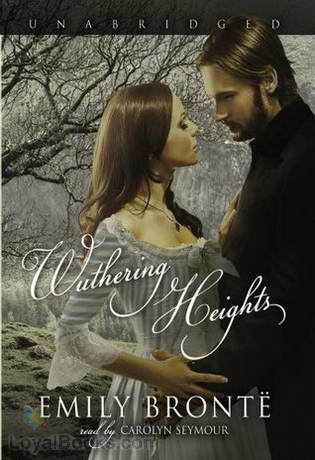

Both books would overshadow Emily's work for her entire short life, which lasted for a little bit less than one year after Wuthering Heights was first printed. It was not appreciated by critics, and received mixed and very tepid reviews. She did not leave to see her book become the most wildly popular of the three, and an enduring classic that school children are forced to read in English classes the world over. 

It has been adapted for the big screen a whopping 15 times, it's been made into three different operas, it's inspired other authors and poets to write their own original works. And it's been at least two different full-length novels...counting the original, of course.

And boy, it is morose. Wuthering Heights itself is a spooky, strange, sad house on the moor (that's kind of like a swamp, with less water). A moody man storms around the house all day, which seems to be haunted by a woman named Catherine. Once all of this is revealed, the reader is transported back to the life of young Heathcliff, the tale's hero. He falls in love with Catherine, the daughter of the man who took him in when he was a young, homeless boy. There is instant rivalry between Heathcliff and the firstborn son, Hindley. Once the old man dies and Hindley is the master of Wuthering Heights, he decides to take all the long, frustrating years of hatred out on Heathcliff. 

Now that the stage is set, as you can imagine much heartache and tragedy follows. Clearly Catherine cannot marry Heathcliff; she's the daughter of a wealthy man and he's a nobody. She falls in with the rich neighbors, and their equally rich son, while Heathcliff sets out to make his way in the world (i.e. gather a fortune). Nothing works out well for any of these characters, though there may be some hope for their children. 

And if you're not interested in long-winded descriptions about the howling wind of the moor or somewhat archaic-sounding language, you don't have to read Wuthering Heights. You can always read Alice Hoffman's much more modern version instead.

The Re-Vamp

Here on Earth, published in 1997, takes place in Massachusetts (which has weather a bit like what you'll find in England) and mirrors Wuthering Heights quite well considering the 150 year age gap.


The setup is basically the same: wealthy family of means takes in a young orphaned boy, who immediately befriends and loves the daughter of the generous man who adopted him. He is immediately at odds with the man's son, and of course he eventually leaves the family home to go out and make a fortune. March, the story's heroine, finally gets tired of waiting for him and marries the wealthy boy next door. Sound familiar? 

Despite the changed setting, character names and time period, Here on Earth doesn't really diverge from Wuthering Heights until the last half of the book. In this version of the story, Catherine (March) remains alive and she ends up returning to her childhood home...and this time, her Heathcliff is there. He married the daughter of the rich neighbors, just like in Wuthering Heights, and he's still bitter and angry because he didn't get what he wanted. But this time around, he's even more broody and much more evil than Bronte's hero.

Personally, I'm not a fan of the plot or the characters in either version -- it's why I can say with certainty I definitely don't like Wuthering Heights. Broody love just isn't my deal, and I know that for a fact. I gave the book a fair shot twice over, and I am one of the few who is not a Bronte fan. The second time around, Wuthering Heights is still depressing and soaked in tragedy...and somehow, I feel that Emily Bronte would definitely approve.

Writing 101: What Does Write What You Know Actually Mean?

Doesn't it seem like every famous author or artist has some dramatic life history? You hear all about how this one struggled with depression and alcoholism, how that one decided to go live in the wild one day, how so-and-so was the daughter of an actress and traveled all over the world. Here's the thing: we can't all have a totally fascinating and interesting life. Some people are, in fact, basically pretty normal: suburban neighborhood, standard high school, part-time summer job working at a fast food joint. So when you hear trite advice like "write what you know," it's perfectly fine for you to roll your eyes.


Reality is Boring

Not all of us know what it's like to see the hills of Spain lit with the afternoon light (lookin' at you, Ernest Hemingway) or grew up listening to fascinating Civil War stories from people who were actually there (but good for you, Margaret Mitchell). Some authors can only dream of being on a fully-rigged sailing vessel, storming across the seas...but should they never write about it just because they've never done it?

No. The much-parroted advice write what you know doesn't necessarily mean that you should go roam around a drafty English castle before you pen that romance novel, and I definitely shouldn't run right out and kill someone before I craft my next mystery book. A great many authors have very successfully written historical fiction novels; obviously, none of them are in possession of time machines. And while I can't say I ever knew the man, for he died well before I was born, I'm pretty darned certain that Jules Verne never actually went to the center of the Earth or 20,000 leagues under the sea, either.

Live and die by the write what you know cliche, and you're limiting your range of topics severely. If everyone followed that adage to the letter, it's extremely unlikely the world would have any science fiction stories, vampire romances, or Stephen King (unless you want to believe he was actually attacked by fog while at the supermarket).

However, write what you know is still decent advice -- but only if you understand that sentiment for what it is.

What Do You Know?

Whether you're writing about a girl named Sally, talking animals who live on a farm or an inanimate object (and those are all real books, by the way), there is always some human truth in the tale. After all, love is love whether it's happening in a drafty castle in 14th century England or in a college English class in Michigan. If you've really been in love and you really feel like you know romance, write that romance novel. Set the scene in an enchanted forest, 200 years in the past, or even on the moon if you like. If you know love, you can pull off a love story -- use your research skills to fill in the blanks when it comes to setting, daily life, and what gravity is like on the moon.

Write what you know is really just an easy way of saying that all writers have to draw on their own experiences and their own histories, wrap that all up in fiction and put it on the page. If you have a very complicated love-hate relationship with your sibling, it can become interesting conflict in your next book. If you've ever had a crush on someone who didn't crush back, you can include that unrequited experience in your work -- and, because you actually had that experience, it will feel very believable. That situation is universal, and it can happen on a pirate ship in 1760 or a futuristic colony on Mars in 2760. The emotions you've felt are always real, and they can always be used in your writing -- whatever you might be writing about.

From the Trenches: Brutal Rejection

"Tell [her] to stick to her teaching; she can never succeed as a writer." These were the words of James T. Fields, then the editor of The Atlantic magazine. According to legend, the Boston editor wrote to the father of a young, aspiring novelist with these very harsh words. She'd just completed work on her first full-length novel, a monster of a volume containing some autobiographical elements and deep, gut-wrenching tragedy. 


The novel in question eventually did get published, and Hollywood has immortalized it in film more than once using some of the city's favorite actresses (including Katharine Hepburn and Elizabeth Taylor). And even if you've never read it, I'm pretty sure you've heard of it.

It's called Little Women, and it's considered to be a classic piece of literature. Louisa May Alcott, who famously penned the book while living in Massachusetts, eventually became a writer for The Atlantic magazine. Looks like she sure showed Mr. editor James T. Fields. 

A Big Little Woman

Louisa May Alcott wrote prose all her life, though she is still best-known for Little Women and the three books that followed; a group of books known as the March Family Saga. It was published, over two volumes, in 1868 and 1869, and still delights readers and film lovers to this day. Little Women has been adapted in three big-budget Hollywood productions: 1933, starring Katharine Hepburn; 1949, starring Elizabeth Taylor, June Allyson, Janet Leigh and Margaret O'Brien; and one in 1994, with Susan Sarandon, Winona Ryder, Claire Danes, Kirsten Dunst and Christian Bale. That's right: 125 years after Alcott was told she would never be a successful writer, Batman was the leading man in the movie adaptation of her book.

Louisa May Alcott was in the writing trenches well before Twitter and word processors, back when everything had to written by hand, and she still had haters to contend with. Thank goodness she didn't listen to them!

Writing 101: Setting Daily Goals

I look through Facebook status updates at least once a day, mostly to see what other writers are achieving while I'm wasting time with social media. One writer in particular, whom I can't name, has a habit of posting the amount of words she's managed to get down on paper during the day. She does it every day, and sometimes the numbers sound positively staggering (four digits and above). And she's not alone; lots of writers offer similar updates, word counts and all. All of it got me to thinking, and now I'm wondering if I'm undisciplined. Should I be setting daily goals? 


Daily Writing Goals

Discipline and motivation are mercurial mistresses, and they can be expensive to keep. Many, many indie authors have to split their time between a paying full-time job and their somewhat-paying writer alter ego. The process of writing itself is exhausting; it takes much longer to write a book than to read one. Editing and re-reading the book can be a tedious chore. Since many indies are also obliged to work at a day job, not to mention spend some time answering emails and promoting their work, it's a lot to do. 

So why not set a goal for yourself that you feel like you've just got to meet, and pour on the pressure? Inspiration and creativity can be forced, right? 

Okay...clearly I'm not a fan of setting daily writing goals -- but only up to a point. I keep a list of tasks that I follow to the letter every day, so in the control freak competition I feel like I'm definitely in the running to place. But assigning a certain amount of words to yourself on a daily basis is just wrong

Don't do that to yourself. If you're going to set a goal, go by the clock and not by the count. Discipline is something that can be forced; you can make yourself sit in front of a computer screen for an hour or two hours every night. But you can't always force motivation, or creativity, or inspiration. So you might find yourself just...sitting there. I certainly have. If you're trying to force yourself to write 500 words, or 1000 words, or any words at all, you're putting enormous stress on yourself. That's not very inspiring, is it? Imagine pulling a gun out on a composer and screaming at him to write you an original song. 

You may scoff at the comparison, but it's not far from wrong. We have a tendency to be harder on ourselves that others would ever be on us, and creative types in particular can be highly judgmental of their own talents and abilities. Add a daily goal on top of all that, and you're just borrowing trouble -- you're punishing yourself. What happens if you just can't meet that daily goal? Are you now a failure, a wastrel, a miserably poor author? 

Daily goals can be dangerous, so if you play with fire learn to be careful. If you truly have trouble making time to write and getting motivated to do so, setting a goal of one to two hours a day (or more) may be a very helpful way to keep yourself on track. But if you know you're going to write for six hours on Saturday and another five on Sunday, why burden yourself with something else to do if you're just not feeling the writing itch during the week? Setting daily goals does work for some indies, but don't let that force your hand, and don't ever make writing a stressful chore or a habit that you're enslaved to. Always remember that you're supposed to love it.