Justice (Deck of Lies, #1)

Get it everywhere online books are sold!

The Tower (Deck of Lies, #2)

Visit the Books page for free samples

Death (Deck of Lies, #3)

Get book downloads on the Free Stuff page

Judgment (Deck of Lies, #4)

Get the boxed set edition to get even more secrets!

Hope's Rebellion

Get it now!

Books on Film: Fast Times at Ridgemont High

Too many people have no idea that Fast Times at Ridgemont High was a book before it was a movie. Those who have read it largely agree that it's even better than the famous film, yet the book is currently out print. If you haven't been exposed to it, you've truly missed out on one of the most authentic high school stories ever told.


The Book

Cameron Crowe is a talented writer who got an early start (the film Almost Famous is loosely based on his life). While working for Rolling Stone, Crowe went undercover at a high school while in his early twenties in order to research Fast Times at Ridgemont High. He attended for an entire school year, and a very memorable book and movie were the result.


The book itself very closely resembles the movie, but the story has much more depth. Linda and other characters become less shallow on the page, and there's much more dialogue and interaction. Since it's out of print, you'll have a hard time finding a copy (it's not available digitally). But you can watch the film to get a sense of the story.

The Film

Fast Times tracks a key group of high school students through one year. At the center of the story is Stacy Hamilton, a sophomore who has spent the summer working at a hip burger joint in the mall. She's friendly with Linda, who is a senior. Brad Hamilton, Stacy's older brother, is also a senior and he's pretty much got it made. He's got a great job, a cool car and a steady girl. He's the opposite of Rat, the shy movie usher who works across the mall from Stacy's summer gig. He has a huge crush on her, and under the coaching of his too-cool-for-school friend Damone, asks her out on a date.

Stacy is being coached through High School dating by Linda, who is purportedly very knowledgeable about sex. With her encouragement, Stacy makes a date with a much older guy. She lies to him about her age, sneaks out of the house, and the two have sex on their date. He sends her flowers the next day, which she asks her brother Brad to get rid of. He does so by giving them to Lisa, whom he's planning to dump so he can date other girls. 

Stacy uses her newfound sexual confidence to put the moves on Rat during their date, but it freaks him out. She ends up putting the moves on Damone instead, and he's happy to comply. But when he doesn't help Stacy deal with the resulting pregnancy, Linda steps up to get revenge. Rat confronts him, too, and we see that Damone isn't the totally cool guy he pretends to be.

Brad isn't the totally cool guy he thinks he is, either. He loses his job after blowing up at a customer and decides to hang onto his girl, but she doesn't want to hang onto him. He eventually gets a job at a convenience store and, with help from school stoner Jeff Spicoli he becomes a hero.

Jeff is the best character in the film. Played by Sean Penn, Spicoli is that perpetually-stoned slacker who exists in every high school. But he meets his match in the form of Mr. Hand, the school's toughest and sternest teacher.

Stacy learns that Linda isn't really so experienced, and things immediately get better when she stops taking her advice.

What Got Adapted?

The film is more streamlined than the novel, the stories around each character more neatly arranged. On film, distinct main characters emerge, while the book is a bit more scattered and unfocused. And some things did get lost or changed in translation. In the book, Stacy is much more aggressive with her older date. They go on more than one date, and finally she puts the moves on him to get him to make love to her. It happens in one date on film, and he is the aggressor. In the book, he continues to ask her for dates until she reveals her true age to him. 

Spicoli isn't nearly so likable in the book, though some of this is no doubt due to Sean Penn. He makes Spicoli one of the bright spots of the film, but on the page he's more of a buffoon. Many of Penn's memorable film lines aren't even in the original book. Forest Whitaker's character is much more developed on the page; he appears only very briefly in the movie. One fairly prominent character from book, Steve, was deleted from the film entirely.

Search for a copy of the book if you will, but you'll have much better luck finding the now-iconic film. If you've seen it, see it again with new appreciation. If you haven't seen it, what are you doing? Go watch it right now.

Writing 101: A Little Weirdness Inspires Greatness

If you've got strange writing habits, don't worry. Many great authors did lots of weird things while they were writing. Maybe one day, your weird habits will become the stuff of literary legend. 


Getting Weird to Write

Do you have any of the strange habits of brilliant authors who have come before you? If you write lying down, you've got something in common with Truman Capote. The Breakfast at Tiffany's author said he had to write horizontally. He wrote in longhand, and began every morning sipping coffee as he wrote. By the time evening rolled around, he'd moved to martinis. 

T.S. Eliot wanted to be called "Captain Eliot" while he wrote in a room above a publishing house in the 1920s. He had another writing hideaway in the city where he was known as "The Captain." According to legend, he wore green powder on his face to look "cadaverous" while he wrote.

Dan Brown, who penned the Da Vinci Code, wakes daily at 4 am. He writes for 60 minutes at a time before getting up to exercise. Victor Hugo did something even stranger to write Les Miserables. To keep himself from procrastinating, he ordered his valet to take away all his clothes. This left him stuck in the house, with nothing to do but sit around and write naked.

Some authors need weird rituals and odd habits to keep those creative juices flowing. Ernest Hemingway, Virgina Woolf and several other authors famously wrote their works standing up. Hunter S. Thompson could only write after midnight, and a very full evening of substance sampling. Maya Angelou checks into a hotel room where she tells the staff to remove stimulating colors and artwork. Then, she writes a certain amount each day and edits the pages later. 

So anything you're doing while you write can't be that weird. Maybe it takes a little weirdness to find one's writing greatness. Next time you get stuck, try laying down or standing up. Maybe it'll help you create something you never expected.

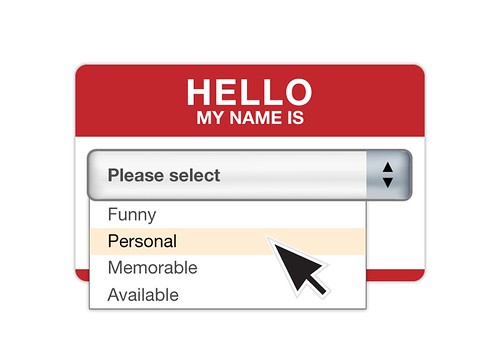
Writing 101: Everything You Need to Know About Character Names

It's not always great fun to come up with character names. In fact, for many authors it's more of a hassle. The protagonist is one thing, but when you have to come up with names for that guy in the hallway, that random next door neighbor and everybody's brother, of course you're going to get a little cross-eyed. Figure out everything you need to know about character names, and make it easier on yourself. 


By Any Other Name

Pretty much every character is going to need a name, but the most important belongs to your main character.  With every main character, keep a few points in mind: make it easy to remember, easy to spell and unique enough to stand out. You want your main character to be memorable and sharable, and for that you've got to have a name that trips right off the tongue. 

The same rules don't apply to all the other characters in your books, with the exception of the main supporting cast. Love interests should also be fairly easy to spell and remember, yet still interesting. Nicknames are a good way to make names more original. In The Neverending Story, the character Sebastian is often called Bastian as a nickname. Get creative with your nicknames, and your characters will be more unique and much more memorable. 

Using celebrity names is dicey business. If it's somehow relevant to the character, you might want to name your hero after a celeb. Use the first name only and at all times avoid using a celebrity's name unless you're simply referencing them (example: "Don't you love that new Katy Perry song?"). Never use a celeb's name negatively. Otherwise, you're risking a lawsuit.

Look for names through baby naming sites. You'll find hundreds of them through a general Internet search, and I swear by them. They're especially good if you don't have any ideas for names. Try searching by meaning, by origin or by first letter, and you're sure to find some likely candidates.

Writing 101: The Secret Life of Social Media

Indie authors need social media to promote. You hear it all the time, but what you don't hear is that sometimes it's a waste of time. What you don't know about the secret life of social media could be hurting you. Or at least, it could be wasting all your best efforts.


Sunday Always Comes Too Late

When you tweet links, do you know which ones get clicked? Or do you just post and post, waiting for it to work? Do you write Facebook statuses, and can't figure out why they don't trend? And what about that YouTube channel that looks as desolate as a ghost town in a Western movie?

You aren't a bad marketer. You just don't know the secret of social media: it's different every day. Focus your efforts and tailor your links not to your audience and not to your genre. Let the day of the week determine how you're going to promote.

Because here's what you don't know: it already does.

Monday, Monday

Start out every work week strong, and start driving traffic to your YouTube page on Mondays. Why? This is YouTube's biggest day for traffic. If people are already going, get them to go check out your trailers. Debut new videos on Monday, because this is your best chance to get clicks.

Include links to your blog, your book pages and your Twitter in every video description. Otherwise, what's the point?

Terrible Tuesday

Spend a little more time on Facebook every Tuesday, because everyone else is. Tuesday is the most popular day for Facebook, so you should post status updates and drive your Twitter followers to your profile. Be more active on the site every Tuesday as well. Check out your feed and comment on the posts that others make. 

In the Home Stretch

Social media activity is normal on Wednesdays and Thursdays, so spread your efforts out however you like. But if you're going to tweet, do it between 3pm and 5pm. This is when Twitter is most active every day, so this is when you want to focus your marketing efforts. 

Friday, I'm in Love

And Friday? Well, if you're going to choose a day to take a break make it this one. Twitter gets the least amount of traffic on Friday, TV gets the lowest ratings, even the Internet is relatively quiet. Don't launch a new contest on this day, or post your best blog, or spend a bunch of time marketing on Twitter because it won't be at all successful as doing it on Monday instead. 

When you know what's really going on with social media, you'll know how to customize your marketing plan. It's a lot easier to sell your message when you know the secret life of social media.

Writing 101: An or A?

There are 9 parts of speech in the English language, and all sorts of rules about how you ought to use them. But when it comes to a and an, maybe we could use a few more...because sometimes, knowing the rules won't help you pick the right article.


Articles...And Other "A" Words

A or an? This seemingly simple question plagues all writers at some point. 

There is a rule (isn't there always) that is meant to be followed: use a before words beginning with a consonant; use an for words that start with a vowel.

So if you write An antique chair would best suit this room, it's right. So is A contemporary chair is the only option.

But if you say A hour ago, you're wrong.

Yes, I know that h is a consonant...but it's not pronounced in hour so it stops existing (not really, just grammatically). The same thing happens when you ask for an honest opinion, but normal rules apply when you want a ham sandwich. Yes, it's confusing. 

The easiest way to tell if you're supposed to use a or an is to say it out loud both ways. If it sounds harsh to your ears, it's probably wrong. Most grammar problems can be solved by reading out loud, and a or an is a perfect example.

Writing 101: Do You Over-Use Pronouns?

"You've been following me," Ariel looked at Sheila, and she smiled.

Who am I talking about up there? When you over-use pronouns, you confuse readers. Learn the tricks of spotting excessive pronoun usage, and eliminate it from your writing.


He Said, She Said, They Said

Eliza looked at Mary. She shuddered before she spoke. "They're coming for us."

There are so many pronouns in the example above, no one can tell what's going on. Did Eliza both shudder and speak, or did Mary? Maybe Eliza shuddered, and Mary spoke. Or it could be the other way around. Maybe there's a third she involved in this mix. 

The point is, I don't know. And you know what? I'm not going to try to sit here and figure it out. When I'm reading a book, the last thing I want to do is play the Match the Pronoun game. If I have to stop reading to ask "wait -- is that 'he' Marcus or Dave?" then you aren't doing your job as an author.

Grammar is always difficult to figure out, and the best way to keep your pronouns in check is through careful editing. But there is a hard-and-fast rule that I like to use that does help: don't repeat the same pronoun in a sentence. If there's a she, use it just once. Same with he and all the rest. And if there is any confusion at all, use a proper name. Sometimes, you might need to add pronouns to once sentence and take them from another. But I like to eliminate pronouns entirely when there's confusion.

Eliza looked at her. Mary shuddered before speaking. "They're coming for us." 

Eliza looked at Mary, who shuddered before she spoke. "They're coming for us." 

You have to be particularly careful of pronouns when two or more persons of the same gender are interacting, because tracing all the he and she stuff shouldn't be difficult. Make your book easy to read, and don't make reader play the pronoun game.

Real Justice

"The characters were so rich and real, I felt like I was watching a movie."


"It was so well written, the plot lines flow beautifully and the characters are so real."

Find out why the reviewer at Eastern Sunset Reads loved Justice (Deck of Lies, #1) when you visit the blog!

Writing 101: Mixing Metaphors

You know that expression you're mixing your metaphors? For a long time, I didn't know what it meant. It's totally okay if you don't know what it means, either, because I made it a point to figure it out...and now I do. 


 Mixing It Up

By its very definition, a metaphor is a little ambiguous. Basically, it's a figure of speech. Metaphors do not make literal sense. For example, writing love is a rose in full blossom is a metaphor. When you say learning is a journey, it's a metaphor. To apply a word or phrase to something that doesn't really fit is to create a metaphor.

So what the heck does it mean when you mix metaphors? You've heard the phrase we have to tighten our belts. It means that you're going to be cutting back on expenses to save money. You've also heard the phrase empty pockets. Even if your pockets aren't literally empty, this metaphor means they're empty of money. So if I were to say we have to tighten our belts because our pockets are empty, I'm mixing metaphors. It comes across as being nonsensical when you mix metaphors like this. Other examples are even more comical: 

I smell something rotten here, and we have to nip it in the bud.

If we cut off our noses to spite our faces, we won't have a clear avenue of escape.

It's sink or swim. You'll either stand on your own or you won't. 

The three mixed metaphors above just don't work. In the first example, we go from smelling something foul to cutting something off. You can't nip a smell, so it just comes across as silliness. In the second mixed metaphor, everything is tangled. First you're bringing up an image of noseless faces, and now we're suddenly scrambling along paths with no end in sight. Why? And the third example is the most ridiculous. Are we swimming or sinking or standing or what? 

Mixed metaphors are unclear, and sometimes they end up reading as pure nonsense. Unless you're writing Mother Goose-style or Dr. Seuss-inspired books, I suggest you shy away from mixing metaphors. A single metaphor per sentence is more than enough. When you try to use two metaphors in the same thought, you're going to get in trouble. 

So look over your writing, look at your metaphors...and eliminate the ones you don't really need. Metaphors are best when used in moderation.